
Unlocking Hidden Psychological Strengths
In a world that often praises extroversion—networking, public speaking, social charisma—introverts are frequently misunderstood or overlooked. Yet psychology reveals that introverts possess unique inner strengths that fuel creativity, emotional intelligence, deep focus, and leadership. Far from being shy or antisocial, introverts draw energy from solitude and introspection, giving them a quiet power that can drive innovation and resilience. In this article, we explore the core psychological strengths of introverts, how they thrive in both personal and professional settings, and how society can better recognize and nurture their potential.
1. Understanding the Introvert Personality Type
Psychologically, introversion is one of the core dimensions in the Big Five Personality Traits under the spectrum of extraversion. Introverts tend to:
- Prefer deep conversations over small talk
- Feel recharged by solitude, not social interaction
- Be introspective and self-aware
- Thrive in calm, quiet environments
Contrary to popular belief, introversion is not social anxiety or shyness—it’s a natural orientation of energy and attention. Introverts can be sociable but often need time alone to regain energy.
2. Cognitive and Psychological Strengths of Introverts
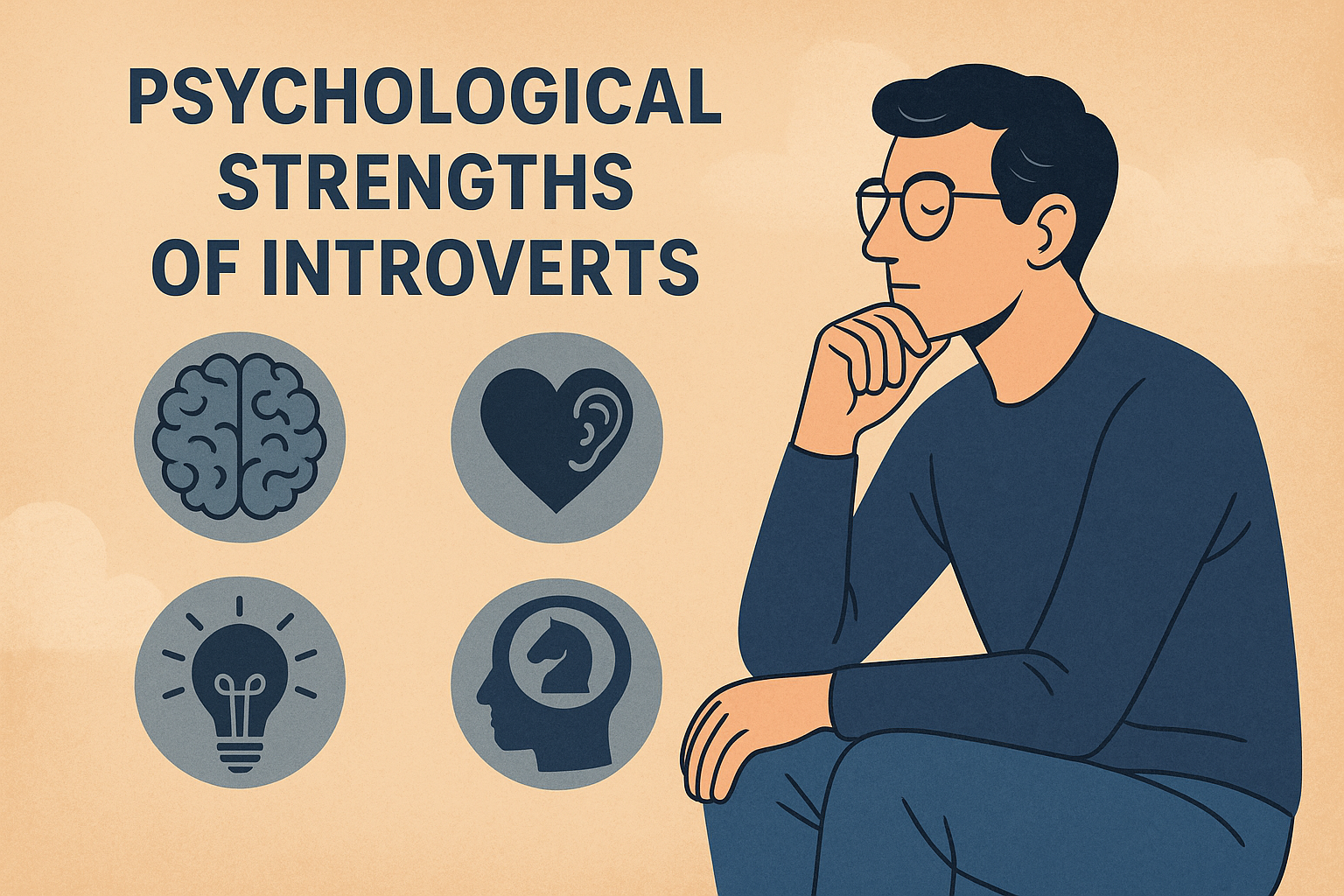
Introverts often excel in reflective thinking, strategic planning, and problem-solving. Their brains are wired for longer neural pathways, which support complex processing. This makes introverts:
- Great at evaluating ideas before speaking
- Excellent writers, analysts, and researchers
- Focused on accuracy and meaning
Their preference for depth over breadth allows introverts to dig deep into topics, master niche skills, and offer thoughtful insights that others may overlook.
3. Emotional Intelligence and Empathy
One of the most underrated strengths of introverts is their emotional intelligence. According to psychological studies:
- Introverts tend to score higher in empathy and active listening
- They are more likely to observe emotional cues in others
- Their quiet presence creates a safe space for deep connection
These traits make introverts natural mentors, therapists, counselors, and leaders who lead with compassion rather than charisma.
4. Creative Power and Solitude
Solitude fuels introverts’ creativity. Famous introverts such as J.K. Rowling, Albert Einstein, and Bill Gates have credited alone time as key to their innovation. From a psychological perspective:
- Solitude enhances default mode network activity, which is linked to creative thinking
- Introverts excel at internal stimulation, allowing ideas to form organically
They often express themselves better through art, writing, coding, or design—channels that allow inward thought to flow outward with impact.
5. Introverts as Leaders: Quiet Influence
While leadership is often associated with extroversion, research from Harvard Business Review and Wharton shows introverted leaders often outperform extroverts—especially in:
- Empowering proactive teams
- Listening to others’ ideas without dominating
- Making thoughtful, deliberate decisions
Introverts lead not by commanding attention, but by inspiring trust, staying grounded, and creating space for others to shine.
The psychological traits of introverts and their quiet confidence are more powerful than we think.