
Introduction
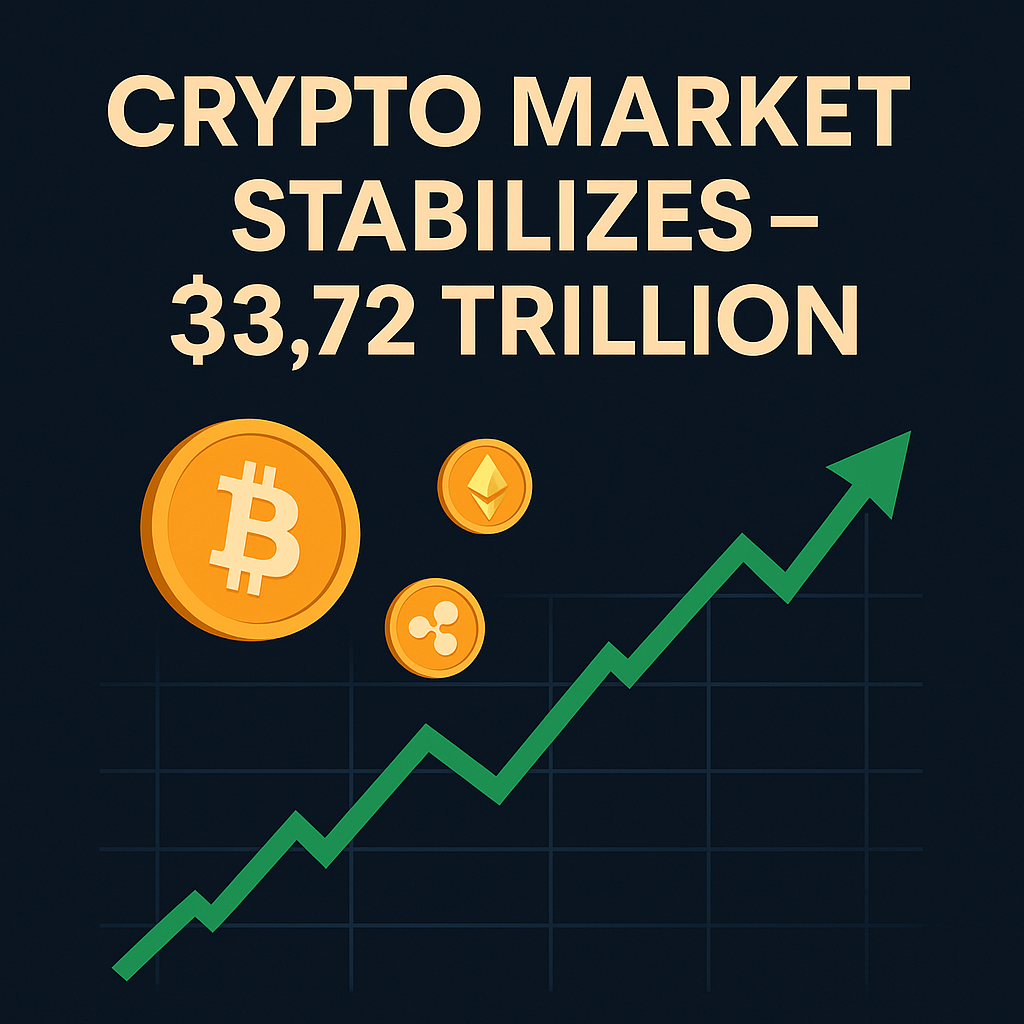
After a turbulent few months of uncertainty and corrections, the global cryptocurrency market is finally showing signs of stabilization. With a current total market capitalization reaching $3.72 trillion, investor confidence appears to be returning. This rebound, driven by growing institutional interest and clearer global regulations, may mark the beginning of a new bullish phase in the crypto economy.
Crypto Market Hits $3.72 Trillion: Why It Matters
Crossing the $3.7 trillion mark is significant not only in terms of valuation but also in psychological impact. The crypto space had suffered multiple pullbacks triggered by market fear, regulation crackdowns, and security breaches in previous months. This recovery milestone signals resilience in the crypto ecosystem and the increasing belief that digital assets are here to stay.
Leading coins like Bitcoin and Ethereum have rebounded from previous lows, regaining market dominance. Bitcoin alone holds over 48% of total crypto market capitalization, while Ethereum maintains a solid second place, followed by projects in DeFi, AI, and Web3.
Institutional Money Is Flowing Back In
One of the strongest drivers of market recovery is renewed institutional interest. Major hedge funds, asset managers, and pension funds are cautiously re-entering the space. Several indicators support this:
- BlackRock and Fidelity have expanded their crypto ETF offerings.
- JPMorgan and Goldman Sachs are once again offering crypto exposure to clients.
- Sovereign wealth funds in the Middle East and Asia are investing in blockchain infrastructure and stablecoins.
This institutional momentum not only boosts liquidity but also adds a layer of credibility to the space, attracting retail investors to follow suit.
Regulatory Clarity is Improving Globally
Crypto’s recent stability is also attributed to regulatory developments across major economies. Instead of total bans or ambiguous frameworks, governments are moving toward measured oversight:
- The European Union’s MiCA regulation is now live, providing uniform rules for digital asset providers.
- The US SEC has issued clearer guidance on stablecoins and staking platforms.
- Singapore, UAE, and Hong Kong are positioning themselves as regulated crypto hubs, offering licenses for exchanges and asset managers.
With increased transparency, institutional players feel safer to participate, and developers can innovate with fewer legal uncertainties.
What This Means for Retail Investors
For everyday crypto users, the market’s stabilization brings several benefits:
- Reduced Volatility: While crypto will always have price swings, the violent ups and downs are softening.
- Increased On-Ramps: Easier access to crypto through regulated exchanges, payment apps, and ETFs.
- Better Security: With institutions onboard and more regulation, exchanges are becoming safer and less prone to hacks.
- More Utility: Projects are shifting focus from hype to real-world use cases in finance, identity, and AI.
Outlook: Are We Entering the Next Bull Run?
While it’s too early to call a full-scale bull run, many analysts are cautiously optimistic. If macroeconomic factors such as inflation control and interest rate reductions align with crypto momentum, the next 12 months could be transformative. Bitcoin’s next halving event in 2026 is also looming, historically a catalyst for upward trends.
Still, investors should stay vigilant: always research before investing, diversify your portfolio, and never risk more than you can afford to lose.
Conclusion: A Turning Point for Crypto
The global crypto market’s stabilization at $3.72 trillion could be the turning point that redefines digital finance for the coming decade. With increased regulation, institutional backing, and broader acceptance, cryptocurrencies are maturing from speculative assets to mainstream financial instruments.
👉 Want to stay ahead in crypto? Subscribe to our newsletter for weekly updates, tips, and market analysis.