

Introduction
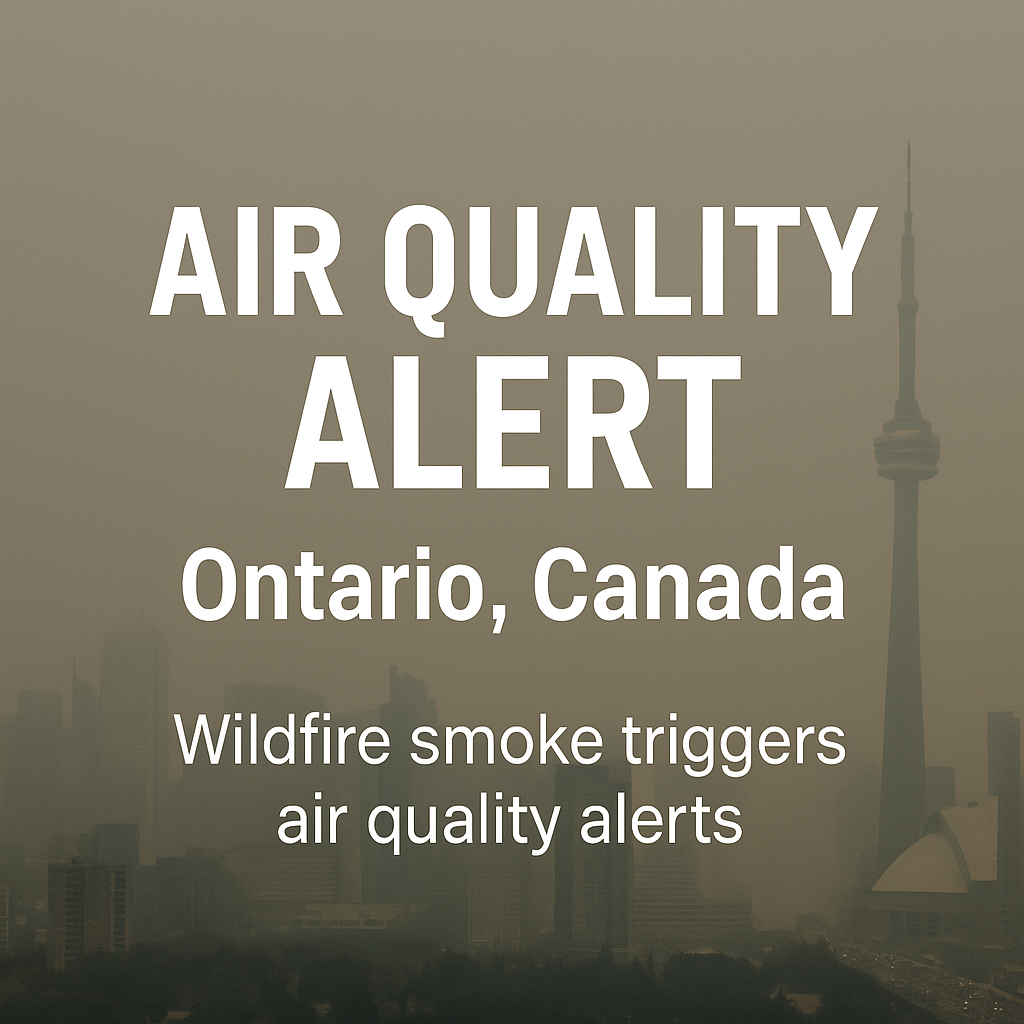
As of early August 2025, Ontario, Canada, is under an active air quality alert due to thick smog drifting from wildfires raging across British Columbia. The dense smoke has traveled thousands of kilometers, creating hazardous breathing conditions for millions of residents. With public health warnings issued and skies turned gray, experts are urging citizens to limit outdoor exposure and monitor air quality updates. In this article, we’ll break down what’s happening, who is affected, and how you can stay protected during this environmental crisis.
Why Is There an Air Quality Alert in Ontario?
Ontario’s air quality issues are largely the result of intense wildfires burning across western Canada, particularly in British Columbia. Prevailing winds have carried massive smoke clouds across the country, blanketing southern Ontario in dangerous levels of fine particulate matter (PM2.5). These microscopic particles can penetrate deep into the lungs, causing respiratory problems, especially in vulnerable populations.
The Air Quality Health Index (AQHI) in parts of Ontario, including Toronto, Hamilton, and Ottawa, has surged to levels between 7 and 10+—considered high to very high risk. These readings prompted Environment Canada and public health agencies to issue widespread alerts and recommend precautions.
Who Is Most at Risk?
Although wildfire smoke affects everyone, certain groups are particularly vulnerable. These include:
- Children and the elderly, who may experience worsened asthma, bronchitis, or cardiovascular strain.
- People with pre-existing respiratory or heart conditions, such as COPD or hypertension.
- Outdoor workers, including construction workers, delivery personnel, and those in agriculture.
- Pregnant women, who may face added complications due to reduced oxygen levels.
The general public may also experience symptoms such as coughing, throat irritation, watery eyes, and fatigue. Prolonged exposure can have more serious health implications if not managed correctly.
How to Protect Yourself During the Air Quality Crisis
Here are several steps you can take to safeguard your health during the alert:
- Stay Indoors: Keep doors and windows closed. Use air purifiers if available to reduce indoor pollution levels.
- Limit Physical Activity: Avoid strenuous outdoor activities, including running or biking.
- Use N95 Masks: If you must go outside, wearing a well-fitted N95 mask can filter out harmful particulates.
- Check Air Quality Levels Regularly: Use official sources like Environment Canada or weather apps with real-time AQHI data.
- Create a Clean Air Shelter: Consider using one room in your home with a portable HEPA filter running continuously.
- Support Vulnerable Individuals: Check in on elderly neighbors or family members and ensure they’re staying safe.
Environmental and Policy Implications
The current crisis is yet another reminder of the growing impact of climate change on Canada’s environment. Wildfires have become more frequent and intense, fueled by rising temperatures and prolonged dry seasons. Experts warn that unless aggressive climate action is taken, these events will become the norm rather than the exception.
The federal and provincial governments are under increasing pressure to improve early warning systems, invest in forest management, and strengthen air pollution regulations. Citizens, too, are becoming more vocal, demanding action and cleaner energy policies to address the root causes.
Conclusion: Stay Informed, Stay Safe
The air quality alert in Ontario is a stark warning of how environmental events from one region can impact others across great distances. As wildfire smoke continues to spread, staying informed and prepared is crucial for your health and well-being. Follow official guidance, take preventive measures, and consider advocating for stronger climate policies that tackle the problem at its source.
👉 Stay safe and updated by subscribing to local environmental alerts or using apps like AirVisual, IQAir, or The Weather Network. Your lungs will thank you.