

Introduction
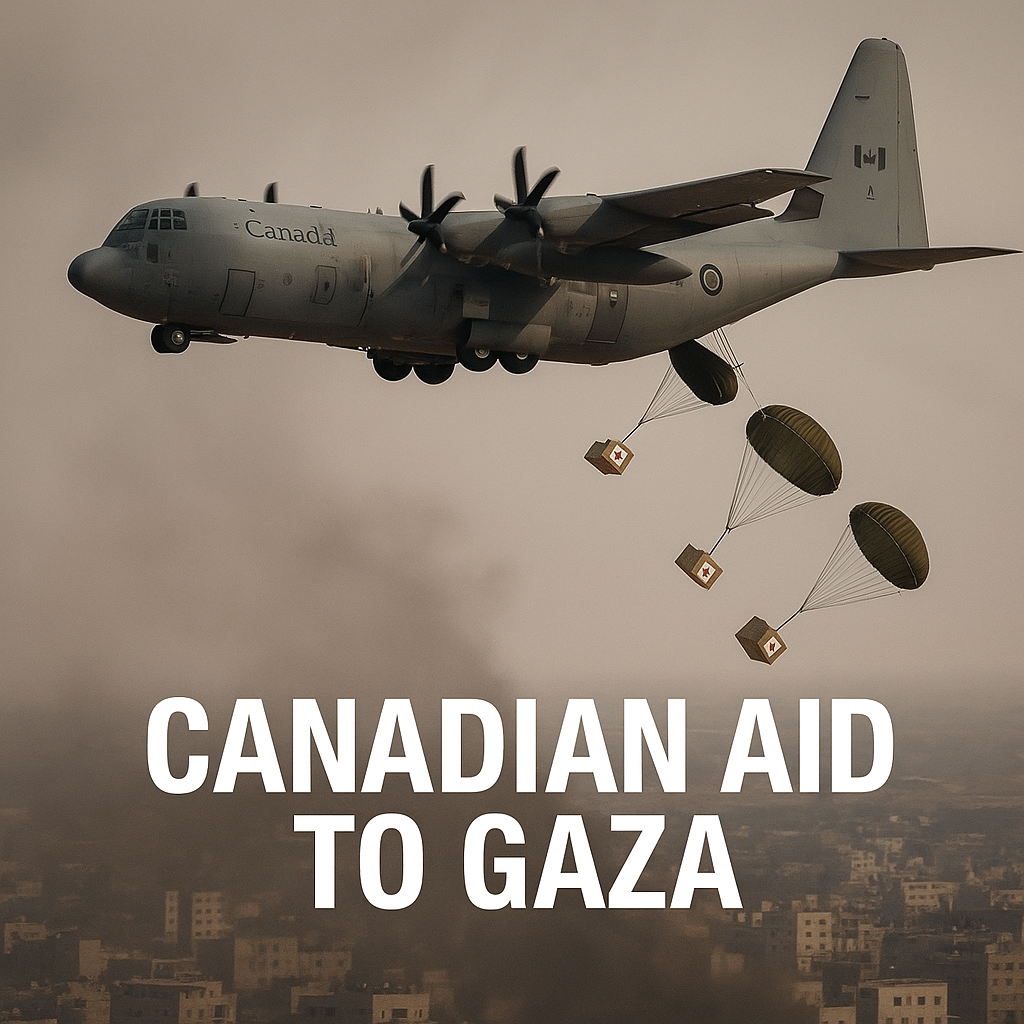
In a critical humanitarian move, the Canadian Armed Forces have executed a second air-drop mission into Gaza using the CC-130J Hercules aircraft. Amidst escalating violence and a worsening humanitarian situation, over 21,600 pounds of essential supplies—including food, water, and medical aid—were delivered to civilians affected by the ongoing conflict. This effort underscores Canada’s commitment to international aid and the urgent need for humanitarian support in war-torn regions.
Canada’s Response to the Gaza Crisis
The conflict in Gaza has led to severe shortages of food, clean water, and medical supplies. Civilian infrastructure has been decimated, and international aid has struggled to reach those in need. In response, Canada has joined a growing list of nations providing direct support to alleviate human suffering.
The Royal Canadian Air Force deployed its CC-130J Hercules aircraft—a long-range tactical transport plane capable of carrying heavy loads across conflict zones—to perform air-drop operations over Gaza. The mission was executed in coordination with international partners and aid organizations to ensure that packages landed in designated safe zones for civilian collection.
What Was Delivered?
The payload consisted of:
- Emergency food rations: Designed to provide high-calorie sustenance for families displaced by violence
- Medical supplies: Including first-aid kits, bandages, antibiotics, and essential medicines
- Clean water pouches: Critical to prevent dehydration and waterborne disease
- Hygiene kits: Soap, sanitizers, and menstrual hygiene products to reduce risk of illness in crowded shelters
Each package was carefully packed and marked with parachutes and Canada’s flag to ensure easy identification and trust on the ground.
The Role of the CC-130J Hercules Aircraft
The CC-130J Hercules is one of Canada’s most versatile aircraft, often deployed in missions involving disaster relief, troop transport, and cargo drops. With a range of over 4,000 kilometers and enhanced low-level flight capabilities, the Hercules can operate in contested airspace and low-visibility zones—making it ideal for delivering aid in Gaza’s hostile and complex environment.
This aircraft allows aid to reach areas that are otherwise inaccessible due to damaged roads or military blockades, giving civilians a lifeline where other routes are closed off.
Global Reaction and Diplomatic Signals
Canada’s air-drop mission is more than just a logistical effort—it sends a powerful diplomatic message. While maintaining a neutral stance in the Israel-Palestine conflict, Canada reaffirms its commitment to upholding international humanitarian law and protecting civilian lives.
International leaders and humanitarian organizations have praised the operation, urging more nations to follow suit with both financial and logistical support. Meanwhile, the United Nations continues to push for ceasefires to allow safe corridors for aid workers and medical evacuations.
Challenges and Criticisms
While the mission was largely celebrated, some critics argue that air-drops are only temporary solutions and risk falling into the wrong hands. Others worry that such efforts may unintentionally legitimize continued military aggression if not accompanied by strong diplomatic pressure.
Still, most agree that in the absence of open land routes, air-drops offer immediate relief and demonstrate international solidarity with the victims of war.
Conclusion: Humanity Above Politics
Canada’s Hercules air-drop is a bold step in a time when political solutions seem far off. As the crisis in Gaza deepens, the world must rally not just through words, but through concrete actions that put human lives first. This mission symbolizes more than aid—it represents hope, compassion, and a moral stand for peace.
👉 Stay informed and support humanitarian organizations working in conflict zones. Every voice and donation can make a difference.