
Why do some people keep going even when the odds are against them? The answer often lies in self-motivation—a core concept in psychology that helps explain how and why individuals push themselves toward their goals. Whether you’re a student striving for academic excellence, an entrepreneur building a business, or someone working toward personal development, understanding the psychology of self-motivation can unlock powerful behavioral changes. In this article, we explore the psychological principles behind self-motivation, its types, how it’s developed, and practical strategies to foster it in daily life.
1. What Is Self-Motivation in Psychology?
Self-motivation refers to the internal drive to achieve goals without external pressure or rewards. In psychology, this concept is deeply rooted in theories such as Self-Determination Theory (SDT), which suggests that motivation thrives when individuals experience autonomy, competence, and relatedness. Unlike external motivation (like money or praise), self-motivation originates from personal satisfaction and purpose. It’s a crucial element for resilience, productivity, and mental well-being.
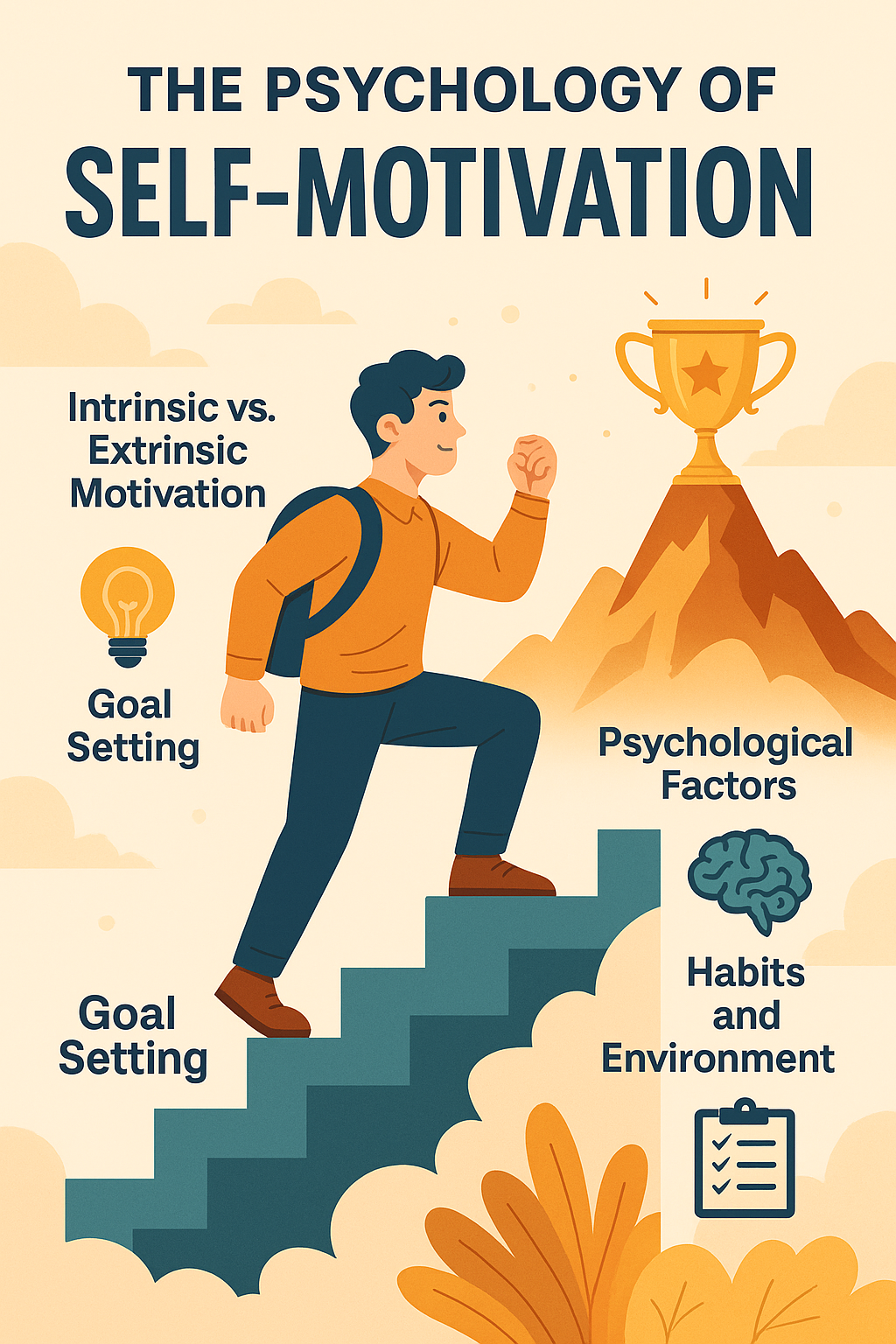
2. Intrinsic vs. Extrinsic Motivation
Understanding the difference between intrinsic and extrinsic motivation is essential.
- Intrinsic motivation is fueled by internal desires—doing something because it’s enjoyable or meaningful.
- Extrinsic motivation relies on outside rewards like recognition, money, or avoiding punishment.
Psychologists argue that while extrinsic motivation can be effective short-term, intrinsic motivation is more sustainable in the long run. For example, someone who exercises because they enjoy the activity will likely continue longer than someone doing it just to lose weight for a wedding.
3. Psychological Factors That Influence Self-Motivation
Several psychological elements play a key role in shaping motivation:
- Goal Setting: Clear, achievable goals can spark motivation by offering direction and milestones.
- Self-Efficacy: Belief in one’s ability to succeed (a concept developed by psychologist Albert Bandura) greatly influences motivation levels.
- Mindset: A growth mindset, which sees failure as a learning opportunity, encourages persistence. Conversely, a fixed mindset can hinder motivation by promoting fear of failure.
- Emotion Regulation: Individuals who manage stress, anxiety, and negative emotions tend to maintain better motivation levels.
4. Strategies to Boost Self-Motivation
Here are proven methods, backed by psychological research, to strengthen your self-motivation:
- Break Big Goals into Small Wins: Achieving smaller tasks builds momentum and confidence.
- Visualize Success: Visualization activates the same brain regions as actual performance, boosting focus and enthusiasm.
- Reward Yourself: Use positive reinforcement to strengthen habits.
- Track Progress: Seeing improvements, even if gradual, can renew motivation.
- Surround Yourself with Positivity: Environments and people that encourage growth contribute to a motivated mindset.
5. The Role of Habits and Environment
Your surroundings and routines significantly influence your motivation levels. According to behavior psychologist B.J. Fogg, designing small, repeatable habits within your environment is more effective than relying on willpower. Examples include:
- Preparing workout clothes the night before
- Setting daily reminders for journaling or reading
- Minimizing distractions in your workspace
Creating an environment that reduces friction and promotes positive action can turn self-motivation into a daily norm rather than a rare occurrence.
The psychology of self-motivation is a fascinating blend of mindset, behavior, and internal drive. By understanding the science behind what pushes us forward, we can better design our lives to stay energized, focused, and goal-oriented. Whether you’re aiming to write a book, lose weight, or simply improve your routine, cultivating self-motivation is your most powerful tool.
Start small, believe in your growth, and stay consistent—your future self will thank you.